Gee .... days have slipped by without a blog entry! What has been happening?
While Naomi has been away, life at home has been a little more hectic I s'pose ..... Naomi came home Wednesday and Kaylia was very happy to see mummy after school then ... it was story time before the dust had settled!
Then Thursday and Friday were business staff pay preparation and processing for me ..... this is still my task ..... the person we have employed to take over the accounts from me is doing a good job but it will take a while before the pay process can be handed over. This will come eventually.
Today I had some tractor time .... a neighbor wanted a hand with preparing a part of his yard for lawn. The area had to be leveled and then fresh soil spread over so that it was ready for grass to be planted. It was a little worrying because he has a young boy who was fascinated by the tractor ...... and I had to keep one eye on the child because the father was not keeping the child as far from the work as I would have liked.
Kaylia is still fixated on when her next day at school will be! She is also trying to get us to talk about going to Bali at Christmas ..... but we know from experience that we must keep away from that. Our tactic is to tell her
"No .... we will talk about Bali in November.
How many months to November? July .... August ... September .... October .... and then November!"
Saturday, June 16, 2018

Monday, June 11, 2018
#1825 Monday 11 June

School excursion to the Maritime Museum in Fremantle
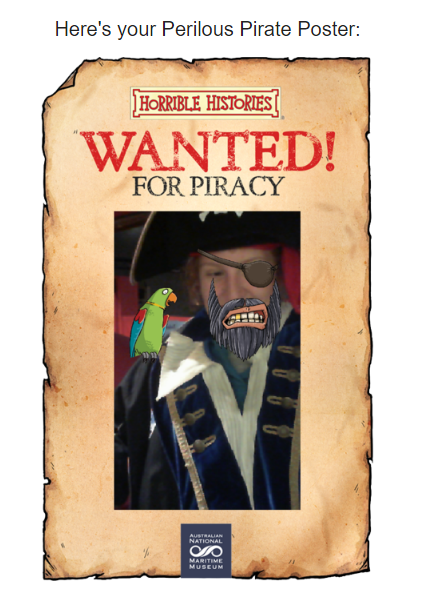
Kaylia seemed to enjoy the day ..... usually when I ask her questions, she gives the impression that she doesn't know what you're talking about and she's not really interested ...... but when I talked to her about today, she knew that she'd been to the museum ... and she responded to comments about pirates.
Tonight when Naomi Skyped from the villa, Kaylia joined in. She was happy to see mummy but once she had seen her and made sure that she was still around, Kaylia was off again .... back to her room.
Saturday, June 9, 2018
#1824 Saturday 9 June
It's 5pm and she's in the bath.... for the third time today! We ponder the wisdom of consuming that much water... but she's so happy! She loves her bath time.
Naomi goes to the villa for 3 days tomorrow night to make sure that the maintenance is being kept up to standard.
Thursday, June 7, 2018
#1823 Thursday 7 June

This is Kaylia (as No 4) .... and if you dare to interrupt her iPhone time, you will probably be told to "GO!"
Wednesday, June 6, 2018
#1822 Wednesday 6 June
Kaylia is going to see "Dr Steve" today .... he makes her back brace and does maintenance on the brace. Currently the straps at the back of the brace are too short and so the brace is too tight for her. After the brace has been fixed it should be more comfortable. Kaylia has been wearing the brace since November 2016 ...... when the fitting is correct, she really likes to wear the brace. I think it relieves the strain of her curved spine. She will need to wear the brace for a while yet.
Monica has joined us as Kaylia's new aupair. Monica is from the UK and she's training to be a vet.
Monica has joined us as Kaylia's new aupair. Monica is from the UK and she's training to be a vet.
Monday, June 4, 2018
#1821 Monday 4 June

Well ..... since the last post that talked about the NDIS tactics to prevent people receiving benefits, the system has struck at Kaylia!
On Wednesday the NDIS conducted Kaylia's annual review .... and wonder of wonders! According to NDIS she is getting better! She no longer has severe autism! .... she has improved from a level 3 to a level 2 .......
"oh ... she doesn't need as much support any more does she?" At this stage the funding has only dropped by 7% ..... but the writing is on the wall.
 |
| That power is called "Politician" |
Isn't it wonderful the way our magnificent .... caring .... benevolent ... government can wave it's miraculous magic wand and cure our disabilities with the stroke of a pen!
Wednesday, May 30, 2018
#1820 Wednesday 30 May
Dentist today! .... Kaylia absolutely loves going to the dentist. We headed over to Karrinyup and arrived about 20 minutes early. We were killing time in the shopping centre when my phone rings ... it's the dentist's rooms ... reminder for tomorrow's appointment!!! What!!! Sorry full up today.
I was still reeling from this and planning our next move when she rings again .... "Sorry ... we have Kaylia booked in twice - today and tomorrow! Do you want to come today? " YES PLEASE!
While this was going on we were standing in the shopping center. I'm sure that she hasn't been there before ... but she knew exactly where the dentist was relative to our position. It's a reminder of her amazing sense of location in the world.... she always knows where she is.
==================================================================
Forgive me .... this article is indirectly about Kaylia ..... How can this person (Angela Shanahan) have the gall ... the absolute ignorance .... to suggest that children like Kaylia should not be considered to have a disability.
Perhaps The Australian Newspaper should axe Angela Shanahan
By Tessa Moodie – Neurodiversity Goddess
Response to The Australian newspaper’s article proposing the NDIS be axed for autistic people on 26th May, 2018
This article has outdated statistics, half-baked assumptions and incites ableist views about autistic people and their very real need for support in Australia.
Firstly, the prevalence of autism is no longer the 1 in 63, recent statistics have evidenced it is more common, and is also underdiagnosed in females. Also, the percentage of participants in the NDIS who are diagnosed with autism is 29% not 31% (this is an old statistic from 2016). According to the NDIS latest report, autism and intellectual disability are both equal in the top number of NDIS participants at 29%. Purporting that autism should be removed from NDIS eligibility because there are simply too many people cashing in, is generally also implying that people with intellectual disability (who are equal 29% to autism) should be excluded from the NDIS, just for having a similar percentage. Making an assumption that we should kick people out of the NDIS just because of a statistically dominant prevalence is preposterous. Just because a disorder is statistically common in the population does not mean it is not a disability, it may simply mean it is a common disability. According to the NDIS latest report in 2018, the total number of NDIS participants in Australia who are autistic is 37,383. According to the AIHW in 2015, 164,000 people in Australia have been formally diagnosed with autism. This indicates that only approximately 22% of total diagnosed Australian autistic people are participating in the NDIS, not even one quarter of total diagnosed autistics. This clearly denotes that not all autistics are participating in the NDIS, and dispels the claim that autistics are running in droves to claim their chunk of NDIS funding allocation just because they have a label of ASD. If anything, this indicates that autistic people are being excluded rather than included in the NDIS for whatever reason, and rebukes claims that autistics are claiming the NDIS easily and unjustifiably.
Claims that the Centrelink carer allowance is handed out predominantly to carers of autistic people “the vast majority (who) are on low levels of the spectrum” is questionable. According to the ABS survey in 2015 of autistic people, almost two-in-three were classed as having “profound or severe disability”, almost three-in-four needed help with cognitive and emotional tasks, and about half needed help with communication. I wouldn’t call this condition “mild” or the vast majority being on the low level of the spectrum. Autism is a spectrum NOT a scale . The repeated reference to “low level” or “mild autism” is not in alignment with current research or practice. It is well known that autism is called a spectrum, because it is a spectrum. A person can be diagnosed with level 1autism, but their profile of impaired function can sometimes be as severe as a level 3, e.g. someone who is verbally fluent can experience selective mutism and not be able to communicate for themselves.
As for the levels of severity contained in the DSM 5; the manual clearly states they should never be used as a guide or label for determining funding or allocation of supports. A carer allowance is not granted because an applicant simply completes a form, nor is it easily given to people who care for a person with a “mild’’ disability. Eligibility is assessed by determining their care needs score high enough on designated assessment tools ADAT (Adult Disability Assessment Determination 1999) or DCLAD (Disability Care Load Assessment (Child) Determination). The basic DCLAD criteria states eligibility is available for (1) a person who is caring for a child with a severe disability or severe medical condition, or, (2) a person who is caring for two or more children with a disability or medical condition whose care needs combined are equivalent to those of a single child with a severe disability or severe medical condition, or, (3) a person is caring for one or more children with a disability or medical condition and a lower ADAT score adult. There is a process to obtain a carers allowance based on function and care needs. Being diagnosed autistic does not automatically qualify a carer for the payment, just like being autistic does not automatically qualify a person for NDIS funds, without further assessment. Claiming that obtaining Centrelink payments and the NDIS is easy for autistic people with a mild disability is fallacious, and paints an incorrect picture that disabled people are abusing the social service system, and misappropriating funds that can be used for “more worthy people” or “better things”.
The claim that Minister Dan Tehan has stated “there will be no changes without independent
research” is not quite correct. In correspondence to stakeholders, Minister Tehan advised that no changes would be made without research, evidence and extensive consultation with stakeholders (i.e. autism organisations) and the community. Community meaning the autism community, i.e. individual autistic people. Implying that research must be independent, i.e. performed by excluding autistic people or stakeholders defies best practice, and it is contrary to UN conventions stating that disabled people must be consulted in changes in policy and legislation that affect them.
Passing criticism that “disability is less clearly defined and parental stress rather than the objective levels of a child’s physical or mental impairment seems to be the main defining element”, creates an either/or notion, that one exists without the other. Who predominantly cares for disabled people? Not institutions, but mostly family. Importantly, in the case of autism (which has a genetic component) there are many children with autism who are being cared for by a parent who is also autistic. A double whammy of disability is common in families with autism. Parents are relevant in the holistic assessment of the needs of a disabled person, but this should not be confused with the fact that when a child is assessed for the NDIS reports are required from professionals outlining the INDIVIDUAL impairment and functional needs for the applicant, NOT the parent. Funding is allocated according to the participant’s individual needs to allow them to exercise “choice and control” as stated by the NDIS. It cannot be denied that this choice and control is maximized through also providing support to carers. Denying the support needs of the people that care for a person with a disability denies that the person has a disability, because if they didn’t have a disability then they wouldn’t need a carer.
Claiming that parents “doctor shop” is a sensationalistic claim. A predominant number of parents in Australia cannot logistically doctor shop even if they wanted to, due to financial constraints, availability of suitably professionals, or living in geographical areas that restrict access to professionals qualified to assess and diagnose autism. Many wait up to 12 months or longer for a proper assessment to be performed with significant stress, travel, cost, energy, and time to obtain that assessment. It is not a journey that anyone wishes for, let alone would “doctor-shop” for. Stating “The diagnosis is then translated to disability to get the child on track for specific help and programs” is stating the obvious, because obviously, the DSM 5 clearly states that ALL people diagnosed with ASD regardless of severity level require support and intervention. Framing this process and system like one that can be used and abused for the satisfaction of a parent who is simply not coping, is deriding parents of children with autism. The pathway to diagnosis can be a gruelling, gut wrenching, energy draining journey for both the parent and the child who has often experienced many years of challenges, misunderstanding and isolation without a proper diagnosis.
The article questioning the validity of autism as a disability and whether it is worthy of being called a disability, is again contrary to the UN convention. The UN convention defines disability as “…. those who have long-term physical, mental, intellectual or sensory impairments which in interaction with various barriers may hinder their full and effective participation in society on an equal basis with others.” Autism can encompass challenges with motor function (physical), cognitive and executive function (mental), intellectual impairment and learning challenges (intellectual) and Sensory Processing Disorder (sensory impairment). Denying that autism does not fit the definition of disability is a breach of human rights and a rejection of the complex and intense needs of autistic people and their carers.
Autistic people already face high levels of stigma, discrimination and isolation. The views contained in the article and the call to scrap the NDIS for autistic people may contribute to the existing poor mental health and high levels of suicidality in the autism community. It also encourages discrimination against people with autism and sets the dangerous foundation for subjugating autistic people back to living in shame and isolation, whilst feeling like their life trajectory is only possible in an institution, instead of being given the opportunity to live in the mainstream community and having appropriate financial support to enable this.
Excluding autistic people from the NDIS is contrary to the aim of the NDIS service charter to offer “…people with disability better access to personalised, high quality and innovative supports and services. A specific focus is to enhance the independence, social and economic participation of people with disability and their carers.” Autism needs to remain in the eligibility for the NDIS, and the definition of disability should be defined according to individual impacts on functioning and everyday living, whether that be due to a medical, psychological, physical, neurological, developmental or genetic condition. The day we start determining disability according to diagnostic label only is a sad day for humanity.
Subscribe to:
Posts (Atom)